



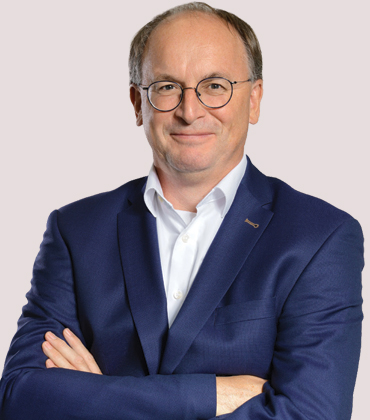
 Dr. Kai Pohlmeyer, Managing Director
At the core of RB’s success is its ability to provide tailored, scalable solutions that meet the needs of its clients, while maintaining the highest regulatory standards. This combination of flexibility, extensive industry knowledge, and strong regulatory compliance enables RB to build lasting partnerships with biopharma companies at all stages of development.
Its microbial manufacturing model has proven essential in meeting the needs of clients seeking to transition from clinical to commercial manufacturing with minimal disruption. By implementing controlled, harmonised processes across its global sites, the company ensures a seamless tech transfer and maximises yields while maintaining audit-ready processes throughout.
Dr. Kai Pohlmeyer, managing director of RB, says, “We guide our clients through every phase of development, ensuring they meet critical milestones efficiently without compromising on quality.”
The company's expertise in microbial expression systems, such as E. coli and P. pastoris, has positioned it as a preferred partner for the production of biologics that are well-suited for microbial systems. Products include therapeutic proteins and peptides, vaccines and plasmid DNA (pDNA). RB leverages these systems for their cost-effectiveness, robustness, rapid growth, and high yield, particularly when mammalian systems would be less viable due to cost or speed concerns. The company has continuously enhanced its offerings by integrating cutting-edge technologies, including cell-free protein synthesis (CFPS) and the Corynex system, a gram-positive bacterial system that expands its microbial capabilities.
This deep-rooted expertise in microbial manufacturing enables RB to serve as a trusted partner for late-stage and commercial products. Through its rigorous approach to process development, analytical development, and GMP-compliant commercial manufacturing, the company consistently delivers high-quality results. The team's proactive engagement and strong communication ensure that clients remain informed and involved throughout the entire process.
A recent example of this collaborative approach is RB's success in helping a client meet an aggressive timeline for producing a Nanobody product. The company implemented an innovative, efficient platform that delivered GMP-compliant products for clinical trials within just six months from the initial cell bank production. This achievement demonstrates RB's ability to execute complex projects with speed, precision, and a commitment to maintaining the highest standards of quality and compliance.
-
We guide our clients through every phase of development, ensuring they meet critical milestones efficiently without compromising on quality
A recent example of this collaborative approach is RB's success in helping a client meet an aggressive timeline for producing a Nanobody product. The company implemented an innovative, efficient platform that delivered GMP-compliant products for clinical trials within just six months from the initial cell bank production. This achievement demonstrates RB's ability to execute complex projects with speed, precision, and a commitment to maintaining the highest standards of quality and compliance.
In response to growing market demands, RB has also expanded its production capabilities. The addition of flexible 300L and 1,500L production lines in Bovenau was a strategic move designed to support the transition of customer projects from clinical to commercial manufacturing. This infrastructure expansion ensures that the company can accommodate both current and future projects while maintaining consistency and minimising tech transfer friction.
RB’s global reach is underscored by its impressive regulatory credentials. The company’s GMP-certified facilities have earned approval from key global regulatory bodies, including but not limited to the EMA, FDA, PMDA, ANVISA, Health Canada, and MFDS. These certifications provide clients with the assurance that their products will meet the regulatory requirements of multiple regions from a single manufacturing site.
Above all, RB's commitment to its clients and their therapeutic progress is evident. The company's philosophy of "Person in Plant," which emphasises customer-centric thinking and hands-on engagement, ensures that clients receive personalised attention and a level of service that is unparalleled in the industry. RB's ability to deliver both high-quality products and efficient solutions has positioned it as a trusted partner for biopharmaceutical developers aiming to bring life-saving therapies to market.
Choosing Microbial CDMO without Losing Process Control
Commercial biologics programs rarely stall because a sponsor failed to reserve manufacturing capacity. Delays are more likely to appear when fermentation assumptions, purification readiness, assay design and batch documentation fall out of sync. Microbial manufacturing is particularly sensitive at this stage. A process that performs well during development can quickly lose momentum if harvest conditions are not fully understood or impurity clearance has not been aligned with the characteristics of the molecule. For executives evaluating a CDMO, manufacturing capacity is important, but maintaining process continuity is even more critical.
The strongest CDMOs do not treat development and manufacturing as separate stages handed from one department to another. Instead, they manage them as a continuous, controlled process. Analytical strategy is developed while the process is still being refined, manufacturing constraints are identified before GMP transfer, sampling routes are planned early and documentation evolves alongside the program instead of being rebuilt for clinical or commercial manufacturing. This goes beyond administrative efficiency. It is an important part of controlling risk. Changes to analytical methods or batch records late in development can trigger comparability work and make regulatory review more challenging.
"Richter BioLogics aligns well with the priorities many sponsors look for when they need microbial expertise backed by GMP manufacturing."
A thorough evaluation should also examine how fermentation and purification work together in practice. Separate upstream and downstream suites can offer sponsors greater flexibility, but only if the transition between them is carefully managed. Having real-time harvest data, purification teams ready to receive material, buffers prepared in advance and clear sample routes in place helps avoid the disruption that often occurs between the bioreactor and the first chromatography step. The same level of scrutiny applies to plasmid DNA manufacturing, where supercoiled content, host-cell impurities, endotoxin burden and unwanted isoforms all influence whether the final material is suitable for its intended use.
Quality systems should be assessed through evidence, not broad assurances. Every GMP manufacturing program generates extensive documentation, and that record should remain clear and consistent from raw material receipt and media preparation through in-process testing, deviations, investigations and final product release. Buyers should look at whether quality control is integrated closely enough with manufacturing to detect early process signals. They should also consider whether the CDMO has the in-house analytical expertise needed for release testing, stability studies, troubleshooting and comparability work, instead of relying on outside laboratories whenever challenges arise.
"For sponsors working to demanding timelines, Richter BioLogics brings together specialized microbial expertise, disciplined documentation, in-house analytical testing and direct project coordination."
Scale also deserves careful consideration. A larger facility does not automatically make decisions faster, and a smaller specialist may not have enough built-in redundancy. A better question is whether the manufacturing model gives sponsors direct access to scientific expertise while providing the GMP infrastructure needed to support late-stage development and commercial production. That balance is especially important in microbial biologics. Therapeutic proteins, antibody fragments, bacterial vaccines and plasmid DNA each bring different manufacturing demands, so buyers should look beyond broad claims about capacity and examine the depth of process and analytical expertise behind them.
Richter BioLogics aligns well with the priorities many sponsors look for when they need microbial expertise backed by GMP manufacturing. Its capabilities span process development, analytical development, microbial GMP manufacturing and plasmid DNA production, including the pART plasmid platform. The company operates independent upstream and downstream processing lines across two multiproduct GMP facilities, with quality control integrated throughout manufacturing campaigns. It supports therapeutic proteins, VHH or Nanobody formats, bacterial vaccines and plasmid DNA. A long GMP manufacturing track record, recent capacity expansion, in-house analytical capabilities and a 2026 FDA inspection with zero observations provide added confidence. For sponsors working to demanding timelines, Richter BioLogics brings together specialized microbial expertise, disciplined documentation, in-house analytical testing and direct project coordination.
...Read more
